
-
Products
-
Featured Products
-
IT infrastructure
- Hard Drives
- OEM Souring
- CPU
- IT infrastructure Memory
- Spare Parts
- Cables
- Power Supply Units
- Adapters
- Controllers
- Server
- Switch
- Network Cards
- IT infrastructure Accessories
- Storage Machines
- Systemboard
- Sfp
- Harddrives
- Heatsink
- Fan
- Rack Options
- Licenses
- Battery
- IT Racks
- Graphics
- Io Expansions
- Routers
- San
- Access Point
- Blades
- Firewalls
- Expansion Cards
- Software
- Chassis
- Flex System
- Ups
- Wifi Controller
- Bladecenters
- Rack Mounts
- Monitors
- Antenna
- Phones
- Hmc
- HOT - SALES and EOL Components
- Hard To Find
- END - OF - LIFE
- Electronic Wholesale
- 88E series
- Maxim Series
- TPS series
- STM series
- SEE ALL

-
IT infrastructure
-
Integrated Circuits (ICs)
- Integrated Circuits (ICs) Kits
- Specialized ICs
- Memory
- Audio Special Purpose
- Clock/Timing
- Data Acquisition
-
Embedded
- Embedded - CPLDs (Complex Programmable Logic Devices)
- Embedded - DSP (Digital Signal Processors)
- Embedded - FPGAs (Field Programmable Gate Array)
- Embedded - Microcontrollers
- Embedded - Microcontrollers - Application Specific
- Embedded - Microprocessors
- Embedded - PLDs (Programmable Logic Device)
- Embedded - System On Chip (SoC)
- SEE ALL
-
Interface
- Interface - Analog Switches - Special Purpose
- Interface - Analog Switches, Multiplexers, Demultiplexers
- Interface - CODECs
- Interface - Controllers
- Interface - Drivers, Receivers, Transceivers
- Interface - Encoders, Decoders, Converters
- Interface - Filters - Active
- Interface - I/O Expanders
- Interface - Modems - ICs and Modules
- Interface - Sensor and Detector Interfaces
- Interface - Serializers, Deserializers
- Interface - Signal Buffers, Repeaters, Splitters
- Interface - Signal Terminators
- Interface - Specialized
- Interface - Telecom
- Interface - UARTs (Universal Asynchronous Receiver Transmitter)
- Interface - Voice Record and Playback
- Interface - Sensor, Capacitive Touch
- SEE ALL
- Linear
-
Logic
- Logic - Buffers, Drivers, Receivers, Transceivers
- Logic - Comparators
- Logic - Counters, Dividers
- Logic - FIFOs Memory
- Logic - Flip Flops
- Logic - Gates and Inverters
- Logic - Latches
- Logic - Multivibrators
- Logic - Parity Generators and Checkers
- Logic - Shift Registers
- Logic - Signal Switches, Multiplexers, Decoders
- Logic - Specialty Logic
- Logic - Translators, Level Shifters
- Logic - Universal Bus Functions
- Logic - Gates and Inverters - Multi - Function, Configurable
-
PMIC
- PMIC - Power Over Ethernet (PoE) Controllers
- PMIC - Power Supply Controllers, Monitors
- PMIC - RMS to DC Converters
- PMIC - Supervisors
- PMIC - Thermal Management
- PMIC - V/F and F/V Converters
- PMIC - Voltage Reference
- PMIC - Voltage Regulators - DC DC Switching Controllers
- PMIC - Voltage Regulators - DC DC Switching Regulators
- PMIC - Voltage Regulators - Linear
- PMIC - Voltage Regulators - Linear Regulator Controllers
- PMIC - Voltage Regulators - Linear + Switching
- PMIC - Voltage Regulators - Special Purpose
- PMIC - AC DC Converters, Offline Switchers
- PMIC - Battery Chargers
- PMIC - Battery Management
- PMIC - Current Regulation/Management
- PMIC - Display Drivers
- PMIC - Energy Metering
- PMIC - Full, Half - Bridge Drivers
- PMIC - Gate Drivers
- PMIC - Hot Swap Controllers
- PMIC - Laser Drivers
- PMIC - LED Drivers
- PMIC - Lighting, Ballast Controllers
- PMIC - Motor Drivers, Controllers
- PMIC - OR Controllers, Ideal Diodes
- PMIC - PFC (Power Factor Correction)
- PMIC - Power Distribution Switches, Load Drivers
- PMIC - Power Management - Specialized
- PMIC - Voltage Regulators - Linear, Low Drop Out (LDO) Regulators
- SEE ALL
- SEE ALL
-
Discrete Semiconductor Products
- Current Regulation - Diodes, Transistors
- IGBTs - Arrays
- Thyristors—SCRs
- Bridge Rectifiers
- Diacs, Sidacs
- Diodes - Zener - Arrays
- Diodes - Zener - Single
- Diodes, Rectifiers - Arrays
- Diodes, Rectifiers - Single
- FETs - Arrays
- FETs - Single
- IGBTs - Modules
- IGBTs - Single
- JFETs (Junction Field Effect)
- Power Drivers - Modules
- RFFETs
- SCRs - Single - Modules
- SCRs - Single
- Triacs
- Variable Capacitance Diodes (Varicaps, Varactors)
- RF Diodes
-
TRANSISTORS
- Transistors – FETs, MOSFETs – Single
- Transistors - FETs, MOSFETs Arrays
- RF Transistors (BJT)
- Transistors - FETs, MOSFETs - RF
- Transistors - Special Purpose
- Transistors (BJT) - Arrays
- Transistors (BJT) - Arrays, Pre - Biased
- Transistors (BJT) - Single
- Transistors (BJT) - Single, Pre - Biased
- Darlington Transistor
- SEE ALL
- SEE ALL
- Memory Cards, Modules
-
Sensors, Transducers
- Sensor Interface Junction Blocks
- Sensors, Transducers -Magnets Sensor -Matched Magnets
- Sensors, Transducers -Position Sensors- Angle, Linear Position Measuring
- Sensor Cable Assemblies
- Capacitive Touch Sensors, Proximity Sensor ICs
- Current Transducers
- Encoders
- Image Sensors, Camera
- IrDA Transceiver Modules
- Moisture Sensors, Humidity
- Position Sensors - Angle, Linear Position Measuring
- Pressure Sensors, Transducers
- Proximity Sensors
-
Optical Sensors
- Optical Sensors - Ambient Light, IR, UV Sensors
- Optical Sensors - Photo Detectors - Remote Receiver
- Optical Sensors - Photodiodes
- Optical Sensors - Photointerrupters - Slot Type - Logic Output
- Optical Sensors - Photointerrupters - Slot Type - Transistor Output
- Optical Sensors - Phototransistors
- Optical Sensors - Reflective - Analog Output
- Optical Sensors - Image Sensors, Camera
- SEE ALL
- Motion Sensors
- Temperature Sensors
- Magnetic Sensors
- Proximity Sensors - Industrial
- SEE ALL
-
Optoelectronics
- Fiber Optic Transceiver Modules
- Display Bezels, Lenses
- Display Backlights
- LED Emitters - Infrared, UV, Visible
- Ballasts, Inverters
- Optocouplers/Photocouplers
- Infrared, UV, Visible Emitters
- LED Indication - Discrete
- LEDs - Circuit Board Indicators, Arrays, Light Bars, Bar Graphs
- Optics - LEDs - Light Pipes
- Panel Indicators, Pilot Lights
- LEDs - Spacers, Standoffs
- Fiber Optics
- Led Lighting
- Display Modules
- LCD, OLED, Graphic
- LED Character and Numeric
- Custom Products
- SEE ALL
- Circuit Protection
-
Connectors, Interconnects
- AC Power Connectors
- Keystone Connector Accessories
- Card Edge Connector Housings
- Card Edge Connector Contacts
- Headers & Wire Housings
- LGH Connectors
- Terminals—Screw Connectors
- USB, DVI, HDMI Connectors —USB, DVI, HDMI Connector Assemblies
- Industrial Controls, Meters——Controllers——Specialty Controllers
- Card Edge Connectors - Edgeboard Connectors
- Circular Connectors
- Memory Connectors - PC Card Sockets
- Modular Connectors
- Pluggable Connectors
- Power Entry Connectors - Inlets, Outlets, Modules
- Rectangular - Board to Board Connectors
- Rectangular Connectors
- Sockets for ICs, Transistors
- Terminal Blocks
- Terminals
- USB, DVI, HDMI Connectors
- Backplane Connectors
- Coaxial Connectors (RF)
- FFC, FPC (FlatFlexible) Connectors
- D - SUB, D - SHAPED connectors
- Terminals - PC Pin Receptacles, Socket Connectors
- Terminals - PC Pin, Single Post Connectors
- Terminals - Quick Connects, Quick Disconnect Connectors
- Terminals - Specialized Connectors
- Terminals - Wire Splice Connectors
- Terminals - Wire to Board Connectors
- FFC, FPC (FlatFlexible) Connector Assemblies
- Heavy Duty Connector Frames
- Heavy Duty Connector Accessories
- Heavy Duty Connector Inserts, Modules
- Modular Connector Jacks
- Modular Connector Jacks With Magnetics
- Modular/Ethernet Connector (RJ45, RJ11) Jacks
- Pluggable Connector Assemblies
- Rectangular - Board to Board Connectors - Arrays, Edge Type, Mezzanine
- Rectangular Connectors - Board In, Direct Wire to Board
- Rectangular Connectors - Free Hanging, Panel Mount
- Rectangular Connectors - Headers, Male Pins
- Rectangular Connectors - Headers, Receptacles, Female Sockets
- Rectangular Connector - Accessories
- Rectangular Connector Contacts
- Rectangular Connector Housings
- Rectangular Connector - Spring Loaded
- Solid State Lighting Connector - Assemblies
- SEE ALL
- Capacitors
- Resistors
- Relays
- Isolators
- Filters
- Power Supplies - Board Mount
-
RF/IF and RFID
- RFID Reader Modules
- RF and Wireless >RF Power Dividers/Splitters
- Attenuators
- Balun
- RF Amplifiers
- RF Antennas
- RF Demodulators
- RF Detectors
- RF Diplexers
- RF Directional Coupler
- RF Evaluation and Development Kits, Boards
- RF Front End (LNA + PA)
- RF Misc ICs and Modules
- RF Mixers
- RF Modulators
- RF Power Dividers/Splitters
- RF Receivers
- RF Switches
- RF Transceiver ICs
- RF Transceiver Modules
- RF Transmitters
- RFID, RF Access, Monitoring ICs
- RF Multiplexers
- SEE ALL
- Crystals, Oscillators and Resonators
-
Uncategorized
- Audio Products
- Cable Assemblies
- Cables, Wires
- Cables, Wires - Management
- Hardware, Fasteners, Accessories
- Inductors, Coils, Chokes
- Industrial Controls, Meters
- Potentiometers, Variable Resistors
-
Programmers, Development Systems
- Evaluation Boards - Embedded - Complex Logic (FPGA, CPLD)
- Evaluation Boards
- Evaluation Boards—RF Evaluation and Development Kits, Boards
- Evaluation and Demonstration Boards and Kits
- Evaluation Boards - Analog to Digital Converters (ADCs)
- Evaluation Boards - Audio Amplifiers
- Evaluation Boards - DC/DC & AC/DC (Off - Line)SMPS
- Evaluation Boards - Embedded - MCU, DSP
- Evaluation Boards - Expansion Boards
- Evaluation Boards - Op Amps
- Evaluation Boards - Sensors
- Evaluation Boards - Linear Voltage Regulators
- Evaluation Boards - RF, RFID, Wireless
- SEE ALL
- Switches
- Transformers
- Tools and Supplies
- Prototyping, Fabrication Products
- SEE ALL
-
Featured Products
-
Manufacturers
- Altera
- Analog Devices Inc.
- Atmel
- Bosch Sensortec
- Cypress Semiconductor Corp
- Diodes Incorporated
- Freescale Semiconductor - NXP
- FTDI, Future Technology Devices International Ltd
- Infineon Technologies
- Linear Technology
- Maxim Integrated
- Microchip Technology
- Micron Technology Inc.
- NXP / Nexperia
- ON Semiconductor
- Silicon Labs
- STMicroelectronics
- Texas Instruments
- Allegro MicroSystems, LLC
- Vishay
- SEE ALL
- My Account
- Supports
- About Us
- Group
- Contact Us
Use Microchip's COTS Device-Based Radiation-Resistant Solutions to Reduce Time-to-Market and Cost-Reducing NewSpace Products
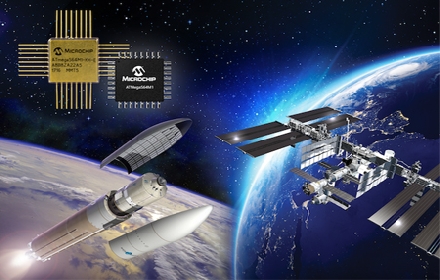
The ATmegaS64M1 microcontrollers enable customers to develop with commercial devices and then migrate to pin-compatible, radiation-tolerant devices.
Developing radiation-tolerant systems for space applications requires not only long lead times but also very high costs because the system must be extremely reliable for long years in harsh environments. Today, NewSpace and other important aerospace applications require accelerated development and lower costs. To meet these needs, Microchip Technology Inc. has introduced a new microcontroller (MCU) that combines unique radiation resistance with the low cost development features of existing commercial (COTS) devices.
The ATmegaS64M1, Microchip's second megaAVR® 8-bit MCU, uses a development methodology called COTS Radiation Harness. This approach leverages a proven automotive grade device, the ATmega64M1, to develop pin-compatible versions of the corresponding high-reliability plastic and space-grade ceramic packages. These devices are designed to meet radiation resistance requirements and have the following targeted properties:
Fully tolerant of single-particle event blocking (SEL) up to 62 MeV.cm² / mg
Secure Storage Integrity Without Single Event Event Capability (SEFI)
The cumulative total ionization dose (TID) is between 20 and 50 Krad (Si)
All feature modules feature single event event reversal (SEU)
The new device joins the ATmegaS128, a radiation-tolerant MCU that has been designed for several critical space missions, including Mars exploration and hundreds of LEO satellite constellations.
ATmega64M1 COTS devices along with their complete development toolchain, including development kits and code configurators, can be used to begin hardware, firmware and software development. When the final system is ready for prototype production or mass production, the COTS device can be replaced with a pin-compatible, radiation-tolerant 32-lead ceramic package (QFP32) device with the same features as the original device. This greatly reduces the cost, but also shortens the development time and reduces the risk.
Patrick Sauvage, Director, Microchip Aerospace, said: "Our COTS radiation-resistant approach gives us the most compelling space-grade device for enhanced aerospace screening of enhanced devices. Also, the development of COTS devices And then replace it with a pin-compatible, full-featured, high-reliability plastic or ceramic package that reduces development time and costs and risks for our customers. "
The ATmegaS64M1 meets the high operating temperature range of -55 ° C to + 125 ° C. It is the first COTS radiation-hardened MCU that combines a controller area network (CAN) bus, digital-to-analog converter (DAC) and motor control. These features make it ideally suited for use in subsystems of satellite, constellation, launcher or key avionics applications such as remote terminal controllers and data processing functions.
Development support
To simplify the design flow and reduce time-to-market, Microchip provided the ATK6641 with a complete STK 600 development board that helps designers quickly get started developing code with advanced capabilities for prototyping and testing new designs. The device is powered by the Atmel Studio Integrated Development Environment (IDE) for development, debugging and software libraries.
More ATmega series products
| Part Number | Mfg Code | Stock(pcs) |
RoHS |
Category |
Unit Price($) |
|
Microchip Technology |
2305 |
RoHS |
IC MCU 8BIT 4KB FLASH 32VQFN
|
RFQ |
|
|
Microchip Technology |
2535 |
RoHS |
IC MCU 8BIT 32KB FLASH 32TQFP
|
RFQ |
|
|
Microchip Technology |
2793 |
RoHS |
IC MCU 8BIT 64KB FLASH 44TQFP
|
RFQ |
|
|
Microchip Technology |
2847 |
RoHS |
IC MCU 8BIT 8KB FLASH 44VQFN
|
RFQ |
|
|
Microchip Technology |
2960 |
RoHS |
IC MCU 8BIT 64KB FLASH 32QFN
|
RFQ |
Learn More About: Microchip Technology
 Author:Brittany Antonia (The author of article owns the copyright.)





